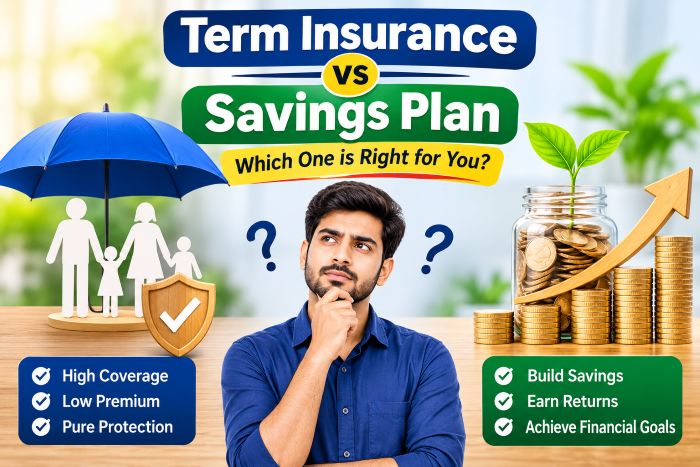
When people buy their first life insurance policy, they’re often offered plans that promise both protection and returns. They sound attractive: “You get your money back!” But mixing insurance and investment often gives you too little of both. Here’s how term insurance and savings-linked plans compare.
What is term insurance?
Term insurance is pure protection. You pay a premium for a fixed period, say 30 years. If you die during that time, your family receives the sum assured. If you survive the term, there’s usually no payout.
Because it covers only risk, term insurance offers a large cover for a relatively low premium, especially when bought young and healthy.
What are savings or endowment plans?
These plans combine insurance with savings. You pay a higher premium; part covers life risk and part is invested. At maturity, you receive a lump sum, and your family receives a payout if you die during the term. Variants include endowment plans, money-back plans and some unit-linked plans.
Side-by-side comparison
| Factor | Term insurance | Savings/endowment plan |
|---|---|---|
| Purpose | Protection only | Protection + savings |
| Premium for same cover | Low | Much higher |
| Life cover amount | High | Usually modest |
| Maturity benefit | Usually none | Yes |
| Returns | Not applicable | Often modest after costs |
| Flexibility | High | Low; early exit can mean losses |
The “buy term and invest the rest” approach
Many financial planners suggest separating the two goals:
- Buy a term plan with enough cover to protect your family.
- Invest the premium difference in suitable investments based on your goals and risk appetite.
This often provides higher cover and potentially better long-term growth than a combined plan. The trade-off is that it requires discipline to actually invest the difference.
How much life cover do you need?
A common rule of thumb is 10–15 times your annual income, adjusted for:
- Outstanding loans such as a home loan
- Future goals like children’s education
- Existing savings and investments
- Your spouse’s income
When might a savings plan make sense?
Some people value forced discipline and guaranteed outcomes over potential returns, or have specific tax or estate-planning needs. If you choose one, understand the guaranteed returns, charges, lock-in period and surrender value before signing.
Questions to ask before buying any policy
- What is the sum assured, and is it enough?
- What is the effective return after all charges?
- What happens if I stop paying premiums?
- What are the exclusions?
- What is the insurer’s claim settlement track record?
For more on choosing the right cover, see BrassSmile’s insurance guides.
Common mistakes
- Buying insurance mainly for tax savings
- Choosing cover based on premium budget alone
- Hiding health conditions or habits like smoking, which can lead to claim rejection
- Not telling family members about the policy
Frequently asked questions
Is term insurance a waste if I survive?
No more than car insurance is a waste if you don’t crash. It’s protection for your family, not an investment.
Should housewives or homemakers have life cover?
Their unpaid work has significant economic value. Some insurers offer cover based on the household’s income.
Can I have more than one term plan?
Yes, many people combine policies, but you must disclose existing cover when applying.
Final thoughts
Life insurance’s main job is to protect the people who depend on you. For most beginners, a simple term plan with adequate cover, plus separate, disciplined investing, gives the best of both worlds.
This article is general information and not insurance or financial advice.